


Why Japan and France Talk about Security?
2026.08.21
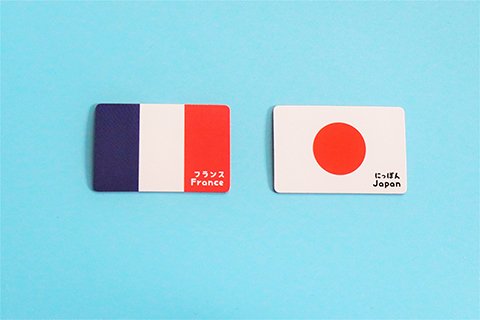
On July 22, the defense ministers of Japan and France held a meeting in Paris, during which they welcomed the progresses made in the security cooperation between the two countries.
Japan and France deepened their partnership in recent years, notably in the domain of defense and diplomacy. As of now, the two countries have held a total of eight meetings with their respective foreign and defense ministers - a format known as "2+2." The first of these was held in 2014, and the last took place on April 1, 2026, during which Japanese and French officials unveiled the Japan-France Defense Roadmap. These strategic dialogues focus on security cooperation, defense technology, and joint responses to regional and global issues. Additionally, the Japan Self-Defense Forces (JSDF) and the French military have also ramped up bilateral and multilateral exercises in recent years.
Still, the purpose and the concrete outcomes of this partnership might be unclear to some. After all, why would two geographically distant countries talk about security and seek to reinforce their cooperation to begin with? In fact, this partnership functions simultaneously as a signal, a reinforcement of the global collective security apparatus, and a set of practical fixes for both countries' military limitations. But to get a better sense of what Japan and France are trying to achieve, let's first look at the actual content of this cooperation.
So, what is this cooperation about? Security cooperation between Japan and France began with the gradual recognition of both governments that exchanging information about the respective security environment of the two countries would prove mutually beneficial. For instance, each faced the security threat of regional nuclear proliferation. Collaboration was thus evoked regarding North Korea and Iran at the Japan-France Foreign Ministers' Strategic Dialogue held on January 13, 2012.
Back then, the impact of China's rapidly modernizing military on regional stability and Beijing's worsening relations with Tokyo was not yet central to their discussion. At the time, French president Nicolas Sarkozy (2007-2012) leaned towards deeper exchanges with China, which was fast becoming an economic powerhouse and had just overtaken Japan as the second largest world economy.
French foreign policy gradually shifted under the presidency of François Hollande (2012-2017). While Paris continued to pursue new economic opportunities with Beijing, mounting criticism against China's human rights record grew within the new ruling party. Worries over an "economic diplomacy" that was too focused on China also prompted a re-balancing towards other regional powers including Japan. On May 19, 2012, Hollande and then-Japanese Prime Minister Yoshihiko Noda held a meeting during the G8 summit in the US, where the two leaders discussed China and its impact on regional security. While admitting that China's development represented an opportunity, Noda stressed that "it was important to urge China to comply with the rules of the international community," at a time when relations between Japan and China had soured, following tensions around the disputed islands of the Senkaku. To which Hollande replied that he "would like to also watch out to see whether the change in leadership this fall will lead to a change in the policies of China." Although Hollande seemed to hedge, France leaned further into its cooperation with Japan. In May 2013, President Hollande made a state visit to Japan, a diplomatic gesture his predecessor had failed to do.
As French diplomacy veered more towards Japan, security cooperation became increasingly central. The two countries organized their first 2+2 meeting on January 9, 2014. Japan's MOFA press release read "[then] Foreign Minister Kishida said the first foreign and defense ministerial meeting with France opened a new dimension in security and defense cooperation between the two countries," notably in the domain of defense equipment and export control, both tied to the defense industry. Japanese Defense Minister Onodera also welcomed the fact that the two countries would gain "a deeper understanding of their respective security environment."
The 2+2 meetings became the main avenue through which Japan and France discussed about security and yielded tangible results. At the second 2+2 meeting held in 2015, the two countries signed a Transfer of Defense Equipment and Technology Agreement, which provided the legal framework for the future development of a sonar system. In 2017, the two countries announced the start of negotiations toward an Acquisition and Cross-Servicing Agreement (ACSA), which was signed in 2018 and enable the JSDF and the French armed forces to exchange logistical support. The ACSA paved the way for enhanced joint exercises between the two forces, with a trilateral drill (involving the US) simulating remote island defense in 2021 and their first bilateral fighter jet exercise conducted in 2023. That year, Japan and France also launched a series of annualized bilateral joint exercises entitled Brunet-Takamori. Among other things, the latest developments include negotiations for a Reciprocal Access Agreement (RAA), which would facilitate troop entry into their respective territories, and ongoing cooperation in space defense, with France's Space Command now hosting a JSDF liaison officer.
There are a few reasons why this cooperation matters. First, although Japan and France are geographically distant, this security cooperation signals the alignment of their values regarding the protection of the current rule-based international order, and by extension, the status quo and the resolution of issues through dialogue rather than force. Japan and France's security cooperation deepened as both faced increasingly complex challenges in their direct vicinity, notably due to the grey zone tactics employed by Russia and China. Back in 2014, tensions flared up between Russia and Ukraine at the doorstep of the European Union. Hollande acted as a mediator in the Minsk Protocol, which sought to mitigate the consequences of Russian covert operations in the Donbas and Crimea. In East Asia, regional maritime order became increasingly unstable, with China's use of coast guard agencies and maritime militia in the East and South China Seas.
Second, regional security issues have global impacts, which call for global partners. Concerns over the above-mentioned challenges to the rule-based order and the status quo were shared beyond respective regional actors, as France considered maritime security in Asia to be of vital economic importance due to the trade flow connecting Europe and Asia, and Japan kept a wary eye on Russian actions in Ukraine, notably because of the ongoing territorial dispute between Moscow and Tokyo regarding the North Territories. Admittedly, the increasing number of joint exercises conducted by Japanese and French forces does not imply that either country would actively and directly commit to the defense of the other's interests. Still, it noticeably strengthens their respective deterrence by signaling status quo challengers that their regional actions could lead to a global response, reinforcing collective security.
Third, this security cooperation also addresses some parochial interests as well. While metropolitan France is far remote from the Indo-Pacific, it still retains sovereignty over many islands - and by extension, a large swath of maritime space - in the Indian and Pacific Oceans, such as Réunion island, New Caledonia, or the French Polynesia. Unilaterally ensuring the protection of its interests there has become a formidable challenge for the overstretched French armed forces, and France is increasingly encouraged to rely on local partners. For Japan, this security cooperation could also have tangible economic benefits. Associating with France, a leading arms exporter, at a time when Japan has loosened its legal framework for arms export but lacks expertise in the area could prove to be fruitful.
NOHARA JUN JULIEN 准教授
国際関係論、国際安全保障(シーパワー)