



The Two-Level Game and the Fate of Greenland
2026..01.21
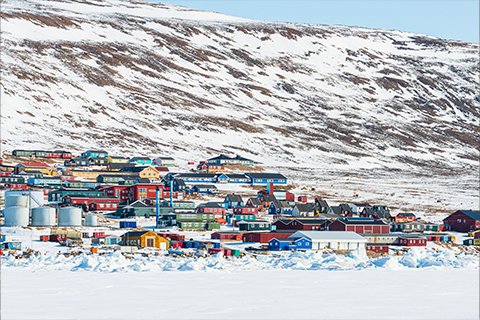
Back in August 2019, US President Donald Trump publicly expressed for the first time his interest in buying Greenland, explaining that "strategically, it's interesting," and that such a transaction would essentially amount to "a large real estate deal." There was a small issue with Trump's statement, however. Greenland, a large island around twenty times the size of metropolitan Denmark - the country to which it belongs - was not for sale. Following Trump's remarks, Prime Minister Metter Frederiksen adamantly opposed the idea, retorting that this was "an absurd discussion."
Trump reignited the controversy at the start of his second term, stating in December 2024 that "ownership and control of Greenland is an absolute necessity." The situation abruptly escalated after the surprise US operation in Venezuela, which resulted in the capture of its president Nicolás Maduro and his wife, Cilia Flores, on January 3, 2026. No sooner had Maduro been taken into US custody that the White House reiterated its ambitions towards Greenland, with the wife of presidential aide Stephen Miller posting on X a provocative picture of the territory in the colors of the American flag with the caption "SOON."
Whatever the true reason that motivates his obsession, Trump has remained adamant despite wide international backlash, with the White House going so far as stating that "utilizing the US military [was] always an option." An armed annexation would prove catastrophic for America's global network of alliances however, as it would irreparably damage NATO, of which Denmark is a member. This is why State Secretary Mario Rubio reportedly stated that a purchase of Greenland remained "the administration's preferred option." Various media outlets have even put a price tag on the sale - $1.1 trillion according to the Financial Times. But is such a deal even possible? Let's examine this question using theories of international relations and the two-level game theory.
The two-level game is a model that takes into account the preferences of domestic constituents in international negotiations. The aggregated preferences of a state's international negotiators and its domestic actors are called a winset. To reach an agreement, the model posits that the winsets of the negotiating states must overlap. In other words, international agreements can only be reached and efficiently implemented if and only if they also reflect the preferences of domestic actors, and not simply those of governmental actors.
Once this has been established, this model can help us understand the feasibility of a deal over Greenland by identifying how the winsets of the various parties may or may not overlap. We first need to look at the current preferences of each actor. The position of the White House is clear - it wants to annex Greenland by any means necessary. That of the US population and the US Congress, less so. According to a recent opinion poll, only 17% of Americans support US efforts to acquire Greenland. Support in Congress is also tepid at best, and in January 2026, a bipartisan congressional delegation visited Denmark to deescalate tensions, with Senator Coons stating that "Greenland is a part of Denmark. Denmark is our NATO ally. That should be the end of this discussion." More interestingly, US mining companies have also remained relatively quiet, perhaps due to the expected challenges posed to the extraction of minerals in the Arctic and the lack of infrastructure.
On the other hand, Denmark's position is that Greenland is not for sale. This view is shared by the Danish government and the Danish people, but also by the government of Greenland and its population. 78% of Danes are against selling Greenland to the US, while 85% of Greenlanders do not wish to be part of the US.
As things stand, the winsets are not overlapping and a deal seems impossible. But could these winsets be changed to make an agreement possible? Let's explore a few scenarios.
The Trump administration's preferred option now appears to be bullying Denmark into a sale. Trump is threatening Denmark and seven other NATO allies with additional tariffs, a coercive measure that, in the context of two-level game theory, is called restructuring. It is essentially an attempt "to alter [the other's] perceptions of the costs of no-agreement," to change the preferences of the domestic actors, either by means of rewards or punishments. Such tactic is not unilateral however, and Denmark and the EU also have the means to exert a similar pressure on US domestic constituents, notably with the EU's Anti-Coercion Instrument. Importantly, while domestic support for annexation in the US is lackluster, frontal opposition has not been especially vocal either, especially among Republicans. The question of Greenland may appear secondary to many US citizens, and pressure from Denmark and Europe may spur Americans to oppose more frontally the plans of the Trump administration.
US attempts at restructuring preferences are also manifest in the White House's attempts to bribe Greenlanders into accepting US annexation, as it considers giving $10,000 to $100,000 to each inhabitant of the island (its total population is of approximately 57,000 people). Other incentives could also take up the shape of generous forms of governance that would couple financial assistance with a greater degree of autonomy for Greenland, such as a Compact of Free Association (COFA) or by turning it into an organized unincorporated territory. Should the US successfully overturn the opinion of Greenlanders on this issue, this could force Denmark to accept a sale. But so far, an overwhelming majority of Greenlanders continue to oppose a US annexation.
Another option could consist in a tripartite agreement on Greenland's independence. Pressure from the Trump administration has shed a light on the deep-rooted independence movement there. An opinion poll conducted in 2025 revealed that 84% of Greenlanders supported independence. At the same time, Danes agree that the future of Greenland should be decided by Greenlanders, with Prime Minister Frederiksen stating that "Greenland belongs to Greenlanders" and that their desire for independence was "both legitimate and understandable." When asked about Greenland being sold to the US, while being opposed in principle, 74% of Danes replied that "the final decision should be Greenland's, not Denmark." Perhaps therein lies the weakness of Denmark's position. Should the Trump administration choose instead to push for Greenland's independence from Denmark - and importantly, the EU - Copenhagen would find itself in a tight corner. In the event of independence, Washington would find itself in an overwhelmingly dominant position in any future bilateral negotiations with Nuuk. In addition, the US administration could also envision a voluntary association of Greenland at a later date, which would give the US more time to sway Greenlanders. This would also have the benefit of somewhat mitigating the damages done to US relations with Denmark and the EU. But it remains to be seen whether Trump would be ready to postpone annexation, let alone be content with an independent Greenland.
Last, Denmark and the US could agree to reinforce their cooperation in Greenland, notably regarding the question of basing rights and security issues. In fact, such legal arrangement is already in place, with a Defense Treaty that dates back to 1951. The US has had bases there since WWII and could further expand its military presence - an option the Danish government has already agreed to, and to which domestic constituents in Denmark, Greenland, the US and the EU would certainly subscribe. But so far, Trump has categorically refused to explore this option, preferring instead to push for maximalist demands.
In sum, winsets appear most likely to overlap when looking at the possible independence of Greenland, notably because it would best reflect the contradicting preferences of the various domestic actors involved. This option would fall short of Trump's current demands, but in the eyes of the White House, it would remain preferable to a mere reinforced cooperation agreement with Denmark. Of course, whether President Donald Trump agrees to rearrange his own personal preferences accordingly is far from certain. There are also no guarantees that Trump will not bypass negotiations altogether and act militarily against Greenland. The recent case of Venezuela should serve as a cautionary tale.
NOHARA JUN JULIEN 准教授
国際関係論、国際安全保障(シーパワー)